Thursday, September 4, 2014

St. Maximilian Mary Kolbe: True Christian Knight (1894-1941) by Chris White


“Do not be overcome by evil, but overcome evil with good.”  Romans 12:21

In September of 1939 Hitler’s army invaded Poland and touched off World War II and one of the darkest chapters in the history of the 20th Century.  The reasons for Hitler’s invasion of Poland were manifold and will not be rehearsed in this article (an excellent overview can be found on Vox.com here: http://www.vox.com/2014/9/1/6084029/hitlers-invasion-of-poland-explained) but in terms of human pain, the Poles felt the weight of Nazi oppression in ways many others in Europe did not.   Not only did they watch in horror as 6 million of their Jewish neighbors were “deported” to the Nazi death camps, but they themselves, a strongly Catholic people, found their faith and culture targeted for destruction.
Nazi March in Warsaw 1939


Father Maximilian Kolbe was a 45 year old priest at the time of the invasion. He had returned to his Polish homeland just three years earlier due to the health problems he was experiencing after years of missionary service in Japan and later India.  As a young man, Kolbe had dream that inspired him to found a Christian knighthood.  This knighthood, called Knights of the Immaculata, was devoted to virtuous living, prayer, service, suffering, and defense of the Catholic church against it’s enemies.   Membership grew in Poland to nearly 800 and soon Fr. Kolbe founded a religious community which in turn built the largest publishing house in the nation.  Their magazine alone had one million subscribers.  In addition to this, they published a Polish newspaper which was quite critical of the Nazi agenda.
Kolbe's Arrest by the Nazis


When the Nazi’s overran Poland, Fr. Kolbe was quickly targeted for arrest and elimination.  He was a threat to the regime as the head of a religious order and major publisher.  He was also known to have hidden thousands of Jews and Polish refugees in the different monasteries of his order.  Before long he found himself as prisoner #16670 in the notorious  Auschwitz Concentration camp.


During his imprisonment, Fr. Kolbe resolved to continue his ministry as a priest to the prisoners.  His was an unusual parish behind electric fences, razor wire, and guard towers.   Certainly clandestine services were offered whenever possible, but most of his ministry centered on simply encouraging his fellow prisoners to trust in the love and care of God in the midst of the evil and darkness that hemmed them in on all sides.


 In July of 1941, 3 prisoners had managed a near miraculous escape from the camp.  The commandant of Auschwitz decided to retaliate with greater force to scare the rest of the prisoners away from thinking of another escape.  He randomly selected 10 men who would be placed in an underground bunker without food or water until they died.  One of the men selected was a recently captured sergeant in the Polish army named  Franciszek Gajowniczek.  When called forward to join the group of the condemned Gajowniczek broke down and cried out “my wife, my children!” in fear. 

Standing in the assembly of prisoners from cellblock 14 and watching all this was Father Kolbe.  Suddenly he stepped forward from the group and spoke to the guards.

“I wish to die for that man.  I am old; he has a wife and children.”

“Identify yourself prisoner!”  

“I am a Catholic priest” 

 For no known reason, the exchange was allowed.  Gajowniczek was sent to his cellblock and Kolbe and the others were led off to be stripped naked and thrown into the pitch black of the starvation bunker.
Father Kolbe offers himself

The desired screams of pain and madness that were to strike terror in the hearts of the other prisoners never materialized.  Instead hymns and prayers were overheard as the prisoners suffered together.  After two weeks seven of the group had died a slow agonizing death, while Kolbe and two others hung on to life having only their own urine to drink.  The commandant, wanting to use the bunker again ordered Kolbe and the others to be finished off by lethal injection.   Kolbe and his fellow prisoners were incinerated in the ovens of Auschwitz.


Did Kolbe’s sacrifice make a difference?  In the life of one man it did.  Franciszek Gajowniczek, the prisoner whose life was saved, lived through the war and was freed from Auschwitz by the allied forces.  After a year-long search he was able to locate and reunite with his wife Helena.  Their two sons were killed by a bombing raid on Warsaw during the war.
Auschwitz in Poland


When Pope John Paul II canonized Maximilian Kolbe in 1982, Gajowniczek was present at the ceremony.  For the remainder of his life (he died in 1995), Franciszek Gajowniczek spoke to groups of people around the world about the gift of life he received because of the love of God and the love of Fr. Kolbe for a complete stranger.
Gajowniczek in 1982


Father Kolbe once wrote “In this world, Modern times are dominated by Satan and will be more so in the future.  The conflict with hell cannot be engaged by men, not even the most clever.”  Sometimes evil must be confronted with words and force if necessary.  That is the right thing to do and under certain conditions even the Christian thing to do.  But there are times when evil confront us individually with such great force we are powerless to fight it.  By accepting and enduring the onslaught of evil against us, we have not succumbed at all, but, like Christ and Maximilian Kolbe, we have overcome evil with good.


Kolbe was declared by Pope John Paul II (himself a fellow Pole who suffered under the Nazi occupation) the patron saint of “our difficult century.”  Flowers are placed next to the starvation bunker in Auschwitz by an unknown patron each week.  He is remembered in the Catholic Church worldwide on August 15th.
Pope Benedict prays in Kolbe's cell

Sources

Adels, Jill Haak.  The Wisdom of the Saints : An Anthology. (Oxford: Oxford University Press, 1987)

“Maximilian Kolbe”  Butler’s Lives of the Saints.  Bernard Bangley Ed. (Brewster : Paraclete Press, 2005)

“Maximilian Maria Kolbe”  Dictionary of Christian Biography.  Michael Walsh Ed.  (Collegeville : The Liturgical Press, 2001)

Saint of the Day.  Leonard Foley O.F.M.  Ed.  Revised Pat McCloskey O.F.M.  (Cincinnati : St. Anthony Messenger Press, 2001)

The Oxford University History of the Twentieth Century.  Michael Howard and Wm. Roger Louis Eds.  (New York : Oxford University Press, 1998)


Wednesday, July 23, 2014

John Nelson Darby and the Secret Rapture of the Church by Chris White


J. N. Darby


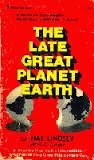
You have probably heard of Hal Lindsey’s Late Great Planet Earth or Lahaye and Jenkins’ Left Behind series or maybe you even own a Scofield Reference Bible, but chances are you’ve never heard of the man behind the theology upon which each of these well-known books are based.  I’m not speaking of Jesus, or Saints Peter and Paul, but rather John Nelson Darby an Irish cleric whose method of Bible interpretation in the 19th century became the most widely accepted approach to understanding future prophecy among evangelical Christians in the 20th and 21st centuries.  Who was this man and why after 18 centuries of Christianity did he see something so many others had missed or misunderstood?


John Nelson Darby (1800-1882) was born to an aristocratic family that were distant relatives of the famous English Navy Admiral Lord Nelson in 1800.  At age 14 he was enrolled in university studies and achieved a degree in Law.  Around age 20 Darby has what would be properly termed a radical conversion experience and amid much opposition from his wealthy father, he gave up law to pursue a call to ministry.  He was disowned and disinherited by his father, but a wealthy uncle befriended him and patronized his ministerial studies.


Upon ordination he worked as a curate (priest) in the Church of Ireland.  After several years Darby became quite disillusioned with the established church and began to align himself with those of a separatist (those Christians outside the established church) mindset.   His disillusionment was largely over the gap he saw between the spiritual orientation of the church in the Bible versus the more worldly orientation of the visible church that is aligned with the state.  Although he remained in the state church for several more years, eventually he made a break joining with other Christians in forming a fellowship called The Brethren. 
Hal Lindsey


The Brethren formed chapters in Plymouth England and Dublin Ireland and because the larger group was found in England, they were named by outsiders the Plymouth Brethren.  Darby later in life would have a strong doctrinal disagreement with the leadership and broke away from them forming another sect of Brethren known to some as the Darbyites.  Brethren theology was in full agreement with most tenets of Protestant theology but did have two distinctions that have always tended to keep them a smaller denomination.  First of all they held the belief that the office of pastor is Biblically unwarranted and that all believers in a church should be free to preach if led by the Spirit to do so.  This is certainly true in the sense that Christianity does not teach an exclusive priesthood by dint of proper ordination (as is believed by churches holding to the doctrine of apostolic succession) but the pastoral epistles of Timothy and Titus do in fact anticipate and suggest a trained and paid teaching ministry in the church.  Secondly, there is a belief called “the ruin of the church.”  This suggests that the visible church on earth is largely corrupt and beyond hope of revival.  What true Christians should do is come out of their corrupt denominational churches and seek the fellowship and encouragement of those walking in the truth of God’s word.  The true Church is not to be confounded with its visible manifestations on earth but rather is composed as a spiritual body of all true Christians who are in union with Christ no matter what their denomination.


Darby and the others in this movement did live in an environment where the visible church, such as the Church of England and Ireland, was corrupted by its relationship to the government.  But Darby was quite surprised to find in America that very few people felt they were involved in a corrupt denomination.  But the American experience was vastly different since there never was the connection between church and state.  Dependence on growth from disaffected Christians along with holding an identity of being the purest strain of Christianity led to many divisions and offenses which have conspired to keep this denomination small even today. 


This brings us to Darby’s unique theological contribution to the evangelical church.  There is no written evidence of exactly when J. N. Darby came to his conclusions, but what is known is that during his 1840 Lausanne lectures on a mission to Switzerland he really developed his theology in a systematic way.  Darby accepted all  the main tenets of Protestantism and was Calvinistic in many things.  He is credited with introducing a wider audience to dispensationalism—where salvation history is divided into separate periods where God deals with humanity in varying ways.  Darby did not invent dispensational thought but did much to popularize it.  There is a bit of negativity to dispensational thinking for in each dispensation man does not succeed in carrying out what God has ordered him to do.  Maybe this isn’t negative so much as giving men no reason for optimism about their spiritual state before a holy God.  If it were not for the grace and patience of God, we would all be toast.


How this touches on Darby’s innovative thought is two-fold.  First of all it was long held by Catholics and most Protestants that because Israel rejected Jesus as their messiah in the 1st century, all the promises and blessings of that covenant were nullified forever in favor of the new covenant with the church.  Darby was very much aware of this thought but saw it differently when looked at through the lens of dispensationalism.  Christ had during his earthly sojourn had a two-fold ministry.  He was fully offering Himself as Israel’s Messiah while simultaneously offering Himself as the Lord of Church knowing that he would be rejected.


In this there emerges a dispensation hidden to the Old Testament prophets that is known as the church age.  This age is an indefinite pause in the prophetic time clock of Daniel (see Daniel chapter 9) where 70 weeks of years are decreed until all prophecy will be fulfilled and God’s plan for Israel will be brought to completion.  The day Jesus entered Jerusalem for the last time marked the 69th week, but 1800 years have passed since that time and human history continues.  But both Daniel and Revelation speak of a final week of years where God will pour out his wrath upon the earth in judgment for sin and rebellion against Him and also to finally bring Israel to repentance that they might embrace Jesus Christ their messiah.  Therefore, this is a time of grace when the Gospel  of Christ is proclaimed among all nations before this final week (see Mark 16).

Depiction of the Rapture

Thus, Darby takes the Rapture (described in 1 Thessalonians 4) as an event only touching those faithful to Christ (in both Testaments) and as separate from Christ’s visible return to set up a world kingdom in Jerusalem in fulfillment of the promises of the Old Testament.  It is a secret in that Christ does not come to earth but instead calls the church up to himself ending the church age and beginning the 70th week of Daniel which ends prophecy and ushers in the golden age of Christ ruling the earth directly.  Not seen by all people, the sudden disappearance of millions on the earth who are Christian, puts the world into chaos and sets the stage for the future development of a state run by the Antichrist.  Because the rapture does not depend on the fulfillment of any prophecy it can happen at any time.  A corollary of this is that events described in the book of Revelation are all future and entail events that will unfold after the rapture of the church.   Another implication of this from Darby’s perspective would have been a restored Israel, something we see in our time but he did not yet see in his.  The interpretive key it seems is that Darby was able to separate out the verses of the prophets and of Jesus that apply to Israel alone and the church alone.  In not confounding the two and thinking in terms of dispensations, Darby saw something that many others had not.

C. I. Scofield

Darby’s great success was not his work with the Brethren, but rather the broad reach of his ideas.  Evangelicals with a literal hermeneutic of the Bible readily adopted his theology.  These ideas were in turn popularized by the Scofield Reference Bible, The Niagara Bible Conferences,  D. L. Moody, and many Bible Colleges and Seminaries.  Nearly all fundamentalists in the 20th century adhered to his basic doctrines and though somewhat modified are still  widely held by most evangelicals today.


Sources

“John N. Darby” Dictionary of Christian Biography.  Michael Walsh Ed.  (Collegeville : The Liturgical Press, 2001)
“John Nelson Darby”  New Dictionary of Theology.  Ferguson, Wright, and Packer Eds.  (Downers Grove : Intervarsity Press, 1988)
“John Nelson Darby”  Who’s Who in Christianity.  Lavinia Cohn-Sherbok  Ed.  (London : Routledge Press, 1998)
Knight, Frances.  The Church in the Nineteenth Century.  (London : I.B. Tauris, 2008)
“Plymouth Brethren or Darbyites”  Cyclopedia of Biblical, Theological, and Ecclesiastical Literature.  McClintock and Strong Eds.  (Grand Rapids : Baker Books, 1981)
“J.N. Darby”  Biographical Dictionary of Evangelicals.  Larsen, Bebbington, and Noll Eds.  (Downers Grove : Intervarsity Press, 2003)
Olson, Roger E.  The Story of Christian Theology : Twenty Centuries of Tradition and Reform.  (Downers Grove : Intervarsity Press, 1999)
Sandeen, Ernest R.  The Roots of Fundamentalism: British and American Millenarianism 1800-1930. (Chicago : University of Chicago Press, 1970)
Sweetnam, Mark and Crawford Gribben.  “J.N. Darby and the Irish Origins of Dispensationalism”.  www.etsjets.org.  Pp. 569-577.  Sept. 2009.  Web 07.2014
Woodbridge, John D. and  Frank A. James III.  Church History : From Pre-Reformation to the Present Day.  (Grand Rapids : Zondervan, 2013)

Wednesday, July 9, 2014

Bartolome' de las Casas and the Beginning of Human Rights by Chris White


Bartolome' de las Casas (1474-1546)

The concept of human rights is something most of us take for granted in western culture today but this idea is a relatively new one in human history and is surprisingly connected with Christopher Columbus and the Spanish colonization of the New World through the Catholic bishop Bartolome’ de las Casas.  The story begins King Ferdinand and Queen Isabella of Spain.  Both of them ardently desired to unify Spain and make it a thoroughly Roman Catholic kingdom.  For years they had been engaged in an effort known as the Reconquista which sought through military, legal, and religious means to take back the parts of Spain that were controlled primarily by Muslims who had fought their way across North Africa and the Strait of Gibraltar to become established there centuries before.  It just so happened that in 1492, Ferdinand and Isabella were at last successful in their enterprise and decided to give this Italian explorer that had already approached them several times already another opportunity to make his case for their support of his venture to find a faster western passage to the far east.

Columbus and Ferdinand and Isabella

Columbus was an expert navigator and business man, but he also knew a bit about promotion.  Knowing  Spain had been exhausted financially in its successful re-conquest of its lands from Islam,  Columbus presented his case that Spain could rebuild its wealth if his voyage was successful.  Like Ferdinand and Isabella, Columbus was very religious and saw a spiritual dimension to his voyage as well.  Not only would there be an opportunity to share Christianity with any of the new peoples he discovered, but if gold and precious stones could be found perhaps a new crusade could be financed and Jerusalem could one again be taken from Muslim control and be put back under Christian control.  In both of these aspects Columbus thought it possible that they would usher in the return of Jesus Christ.


As we know from the perspective of history, Columbus never made it to Asia but discovered the New World.  He did discover new peoples as well, but his idea of Christianizing them was largely a form of subjugation and mistreatment not directly but through the institutions they imported.  And gold was also discovered and this seemed to blunt the consciences of most people involved in this enterprise.  But it is often surprising who God places with whom.


On Columbus’ second voyage a merchant from Seville named Pedro de las Casas accompanied the explorer and 5 years later returned to Spain a very rich man.  His young son Bartolome’ was a university student at the time and was given a gift from his newly returned father: an Amerindian slave from the New World.  This proved to be the beginning of Bartolome’s calling to serve God.
At age 19, Bartolome’ travels with his father to Santo Domingo, Hispaniola (modern day Dominican Republic) and is so moved by the plight of the Indians there that he returns to Spain, enters the Dominican order and prepares to return for the purpose of missionary work.  In 1535 he returns to live in Santo Domingo and to enter a career of preaching to the Native population of Hispaniola.  Bartolome’ de las Casas was actually the first Catholic priest to be ordained in the New World and later one of its first Bishops.  As a member of the clergy, las Casas was part of the ruling class in Spanish society and as such was given by the administration of the colonies a land grant or what was known then as an encomienda.

 
The Encomienda system was basically the old Medieval Feudal system with a special built-in capacity for abuse of those under the lord.  In this system, a Spanish lord (member of the upper class) would be assigned land and a group of native peoples.  The people were to work the land and pay a tribute to their lord.  The lord was responsible for their protection and religious instruction. No doubt Bartolome’ as a priest dedicated to reaching the Amerindians would have been a benevolent lord, but unfortunately in most of the other encomiendas, little effort or consideration was ever given to the well-being of the people, spiritual or otherwise.  There was a lot of taking and very little giving.


Atrocities towards the Natives Changed Everything

There are two stories told about what formed the turning point in Bartolome’s career.  Neither contradict one another and so I will assume they are both true.  The first was his witnessing the cruel treatment of an Amerindian leader who was buried alive for not cooperating with the Spanish authorities.  This was not the only atrocity he witnessed, for Las Casas wrote an entire book about them late in life, but it is a focal event that illustrates what was happening around him.  The second story speaks of Bartolome’ preparing a sermon for Pentecost Sunday.  He reads a verse in the Bible that says to the effect that any offering made to God at the expense of injustice to another is a tainted offering.  Regardless of whether both or only one of them happened, Las Casas decides to renounce his encomienda and devotes the rest of his life advocating for the spiritual welfare and human rights of the Amerindians.


In 1535 and again in 1539 de las Casas returns to Europe and enlists the help of the Holy Roman Emperor Charles V (the very same one that wanted to have Martin Luther killed) and secures orders from him to restrict some of their powers and activities towards the native population.  He returns both to Spain and the New World several times as the newly appointed “Protector of the Indians” informing government officials of the new laws enacted to curb abuses.
las Casas and Charles V

1544 he returns to Seville for his consecration as Bishop and returns with a team of missionaries to the Americas for evangelizing and defending their human rights.  Eventually de las Casas returns to Spain but labors the remainder of his life on behalf of Indian rights until his death in 1566.

So how does this relate to human rights?  In las Casa’s day there was a prevalent view which in part hearkens back to ancient times that conquered peoples are subject to their conquerers.  This primarily meant slavery, but also within the church since the Crusades, there was the idea that since Christianity is the true religion, those conquered who refuse to convert may be subjected to the sword.  A contemporary investigation of this period revealed (although possibly exaggerated) that at least 15 million natives were exterminated during the first 10 years of the Spanish presence in the New World.  This was in part due to atrocities inflicted by the Spaniards but it mustn’t be forgotten that the encounter between Europe and the New World was biologically catastrophic as neither group had the natural antibodies to fight the viruses to which each group was exposed.


But the work of las Casas and others had the effect of creating a crisis of conscience amongst those in academia, the clergy, and the ruling elite.  The old assumptions seemed wrong as did the perpetration of genocide against the Amerindians in Mesoamerica.  This eventually led to the 1550 debates in Valladolid which should probably be considered the first human rights conference in western history.

Sepulveda

The principle debaters were Juan Sepulveda and Bartolome’ de las Casas.  Sepulveda took the position that subjugation to slavery was justified in the New World because the natives were less than people.    Coercion to Christianity was justified because they were evil idolaters (which in some cases is hard to argue against as they did practice human sacrifice).  De Las Casas took the position that the natives of the New World were human beings descended as the Europeans were from Adam and Eve.  If this be true, they are not less than human, but rather humans with the capacity to know God and in need of gentle instruction and persuasion but certainly not coercion.  This is what de las Casas called “evangelical conquest” meaning persuasion of the heart by testimony and example, not at the end of a sword.  This debate transformed the laws of Europe to recognize that as they colonized, there was an obligation to recognize people of different cultures and religions are entitled to be treated with dignity and by the golden rule of Christ just because they are fellow human beings.
De Las Casas also changed the notion of barbarian vs. civilized society.  Barbarism, which originally was associated with inferiority (since Roman times), now had the connotation of inhumanity and cruelty.  By this standard both Europeans and Indigenous peoples were capable of being civilized and barbarous.

There is a persistent idea today that most of the atrocities that happened in the New World had behind them Christian missionaries.  It is true that some of them did evil, but most were people of good will.  Modern secularists fail to be nuanced enough in their thinking to separate the process of civilization from Christianization.  The record points squarely in the direction of government and commercial interests exploiting native populations far more than the church ever did.  Oftentimes the church was a force of ameliorating or completely stopping the abuses altogether as this story illustrates.


It seems that Las Casas does get credited (or rather blamed) for the idea of bringing Africans to the Caribbean.  However, his motives and idea have been greatly twisted.  Las Casas was acknowledging a reality that so many Amerindians had died off that there was no real population left to work the lands.  He wanted to do what he could to protect the remaining population from servitude and abuse.  Secondly, he did not look at Africans as racially inferior but rather more better suited for the climate and labors of the region.  Third, Las Casas did not envision the Africans as being slaves but paid employees.
Gentle persuasion not coercion


It is unfortunate that trust had been so broken by the colonizers that many of the Amerindians wanted nothing to do with Christianity.  Still, the witness of the many priests and monks was seen and admired.  Throughout Latin America, de las Casas is considered a saint and national hero and has been called the Apostle to the Indies.


Sources:

“Bartolome’ de las Casas” Cyclopedia of Biblical, Theological, and Ecclesiastical Literature.  McClintock and Strong Eds.  (Grand Rapids : Baker Books, 1981)

Chidester, David.   Christianity: A Global History.  (New York : Harper San Francisco, 2000)

Hill, Jonathan.  What Has Christianity Ever Done For Us? : How It Shaped The Modern World.  (Downers Grove : Intervarsity Press, 2005)

Kane, J. Herbert  A Concise History of the Christian World Mission : A Panoramic View of Missions from Pentecost to the Present.  (Grand Rapids : Baker Book House, 1978)

Noll, Mark A.  A History of Christianity in the United States and Canada.  (Grand Rapids : Ederdmann’s, 1992) 

Church History : From Pre-Reformation to the Present Day.   John Woodbridge and Frank A. James III Eds. (Grand Rapids: Zondervan, 2013)

Sampson, Philip J.  6 Modern Myths About Christianity and Western Civilization.  (Downers Grove : Intervarsity Press, 2001)

Williams, Eric.  From Columbus to Castro : The History of the Caribbean. (New York : Vintage Books, 1984)

Woods Jr., Thomas E.  How the Catholic Church Built Western Civilization. (Washington DC : Regnery Publishing, 2005)

Yates, Timothy.  The Expansion of Christianity. (Downers Grove : Intervarsity, 2004)