Wednesday, November 5, 2014

Thascius Caecilius Cyprian (c200-258 AD) and the Shape of the Church by Chris White


Icon of Cyprian


St. Cyprian was born to a prominent Roman family in Carthage and for his first 50 years lived what most of us would consider a “charmed life.”  His father was a well-known senator and his position afforded Cyprian with the best this world had to offer in terms of education, material goods, and opportunity.  In his early adulthood Cyprian became a teacher of law and rhetoric (a path to politics and/or public acclaim).  His teaching was in high demand and soon Cyprian was a wealthy man with his own household in Carthage and Roman Villa in the countryside.  
Carthage rivaled Rome for sophistication and power


But like many of us in middle-age, Cyprian went through a period of soul-searching and disenchantment with the world around him.  Roman society was never secular but it’s religious foundation lay in the idolatry of the Greeks and Cyprian found this to be trite and full of falsehood.  He had questions about the meaning of life and they were not answered by a pantheon of gods he didn’t believe to be true.  As people begin to search for God it is not uncommon for God to send someone out to find them.  In Cyprian’s case it was an elder in the Christian church of Carthage by the name of Caecillius who shared the good news of Jesus with him and after his conversion served as his instructor as he prepared for baptism.


Cyprian was baptized in the year 246 AD when he was approximately 50 years old.  In gratitude for his instruction and leadership, Cyprian took as his middle name “Caecillius” to honor his spiritual father. Cyprian was an earnest convert.  By his own testimony he felt his heart was renewed and his life had meaning and purpose.  Having an intellectual gift, he gave himself earnestly to Christian studies reading the Bible and early theologians in a dedicated fashion.  Soon he also divested himself of some of  his land and wealth and gave it all to the poor as a means of worship.
An ancient baptismal near present day Carthage


According to Acts 17:26, God determines the time and place of our existence.  We are rightly men and women of our times at the behest of God and thus we have a part in the specific history and destiny of where we live.  Even as Cyprian was growing towards maturity in his new found faith, he had no idea the challenges he would face and the burdens he would bear through the remaining years of his life.


In 248 AD the beloved bishop of the people of Carthage dies.  As the Christian community considers a successor the name of Cyprian is on everyone’s mind.  There was something quite natural about their selection  in that Cyprian was well-known, was well-educated, and from a family that was widely respected and proven leaders.  But there was equally something unnatural about this as well.  St. Paul’s Epistle to Timothy clearly states that an elder or bishop should not be a new convert lest they become swollen with pride and become the prey of the devil (I Tim. 3:16).  As a man with a commanding knowledge of the scriptures, Cyprian knew this and rejected the intentions of the congregation.  Unfortunately for Cyprian, the Church rejected his rejection and literally forced upon him the mantle of being their bishop.  Although his election was resented by some in church leadership who questioned mere popularity as a qualification for bishop, God used Cyprian in a mighty way and his viewpoints were to have a future impress on the entire church for generations to come.


To understand the context of Cyprian’s teachings and ministry you need to be aware that his ministry started with the Decian persecution for the first two years of it, continued with controversy in the aftermath of the persecution and then ended with the Valerian persecution (257-260) of which Cyprian was one of its casualties.  The Decian persecution was very harsh on the church and was very effective in terms of driving many nominal Christians to apostasize.  Cyprian had observed that the years of prosperity and ease that preceded the persecution had caused the discipline and morals of the church to become quite lax.  Cyprian had only started to enforce stricter discipline when the persecution broke out.   Cyprian viewed the persecution as a divine cleansing of the church which led him to set strict standards by which those who came back to the church would be restored to fellowship.

Read more on the later Donatist Controversy in North Africa  


But Cyprian was destined for controversy because during the persecution, he, the bishop of the city, went into hiding.  Cyprian defended his position as thoroughly biblical: “Our Lord commanded us in times of persecution to yield and fly.  He taught this and practiced it  himself.  For since the martyr’s crown comes by the grace of God, it cannot be gained before the appointed hour.  He who retires for a time and remains true to Christ, does not deny his faith, but only abides his time”.  Though very much criticized for his pattern of hiding and avoiding arrest during persecutions, Cyprian’s extant writings show that he was actively leading his people.  He instructed all to not offer themselves up, but if caught not to cave-in and apostasize but stand faithful in the face of persecution and torture.
In the wake of this persecution,  Cyprian was faced with the issue of dealing with those who failed to stand and yet wanted to be re-admitted to the church.  He believed their failure to stand in persecution sundered their bonds with Christ and the church.  Although Cyprian didn’t originate the idea of penance, this idea certainly crystallized in his times.  If the community of the faithful was going to remain truly that, grievous failure (such as apostasy) and the desire to be restored to the church needed an orderly connection.
Cyprian was committed to theology and the scripture


In truth, Cyprian dealt with this quite circumspectly.  Some had been faithful in their confession but had been tortured severely and had a momentary break in their loyalty.  Others had used money to buy off the authorities.  And still others, even lay leaders, gave up without a fight.  He recognized that there were degrees of failure and made allowances for human frailty.  It seems that his strongest policy was directed towards those who willingly cooperated with the Roman government.
In this case if you were penitent you may attend a sermon or church gathering but you will be deprived of the sacraments until you are on your deathbed or so sick that death might be imminent. 

Cyprian also advocated an alternative if you felt  your soul was in peril.  The alternative was to offer yourself in martyrdom during another persecution.  This offering of your lifeblood was believed efficacious in cancelling out your previous betrayal of Christ by undergoing a second baptism.  In Luke 12:50 Jesus referred to his going to the cross as “a baptism” and so it was implied that this was a baptism in blood. Others were critical of this and cited a tradition that a Christian who had been faithful in a persecution and didn’t die could and did have the right to forgive and restore the lapsed.


Cyprian’s view may seem stern but in fact was a ‘golden-mean’.  Novatus, a priest in Carthage who set himself up in Cyprian’s place when he went into hiding the first time, readmitted everyone who had lapsed without any question of their motives or circumstance.  On the other hand, the Pope in Rome had taken the view (at least for a short period) that never under any circumstance could a lapsed Christian return to the church.

Watch a short 2 minute video on Cyprian and Pope Cornelius 


Penance was considered a medicine for the soul.  It allowed a person to demonstrate over time their sorrow for their sin and eventually be received back into the church as a full member.  It allowed for grace and forgiveness but also restoration and discipline in the community of the faithful.  It may seem that the church forgot the fact that Jesus took back Peter after Peter denied him on the night of his betrayal and arrest (Mt. 26:75) and that Christ is our advocate and mediator before the Father when we sin (I John 2:1).  From my own perspective it seems withholding the benefits of the sacraments from a sorrowful believer is a denial of grace, but the modern viewpoint tends to cheapen grace by extending it often at the sacrifice of all church discipline.  I would also suggest that today’s evangelicals do actually have a form of penance in their ranks.  Witness the complete predictability of what happens when a high-profile minister is caught having committed a grievous sin.  Although the names and sins vary, their elders uniformly send the pastor and his spouse away to a counseling center for 10 weeks and then they return with several accountability advisors and then they are officially restored.  The ancients were seeking the same end in the absence of a therapeutic culture.

Cyprian in bishop's clothing

But far beyond his policies regarding lapsed Christians, Cyprian’s impress on the office of the bishop and the role of the church came to be the dominant view of Christendom and centuries later contributed to the development of the Roman papacy.  Cyprian held a high view of his office as a bishop.  In his day, the bishop was the leader of a church in a particular area (such as a city) and governed the life of the church in its worship and discipline.  Other ministers of congregations were his deputies and served under his authority.  His view was that “Bishop is in the church, and the church is in the Bishop and outside of the church there is no salvation”.  What Cyprian was doing was pointing to the reality, much more clearly known in his day, that bishops either succeeded or were connected in their succession to the original apostles of Christ.  Lists were kept and maintained because it was believed this would maintain and conserve the truth and apostolic foundations of the true church (as opposed to any heretical or schismatic churches).  Being connected with a true bishop in church membership and the receiving of the sacraments ensured that one had believed in the true gospel and was rightly connected into the body of Christ.  Apostolic succession and the inheritance of the churches knowledge and experience is important to all Christians.  For Protestant Christians the inheritance of the faith is found in the Apostolic writings (The New Testament) alone.  For Eastern Orthodoxy and Roman Catholicism the inheritance of the faith comes the scriptures but also the long and unbroken chain of bishops from the ancient times to the present.
Bishops met in councils to discuss problems and theology


Cyprian, like others in his day, also believed that the bishop of one church was the equal to all other bishops in the world.  He believed in praying for other bishops and also to gather with them to discuss and make judgments on matters of faith and teaching.  The practice of councils was in place and the practice of the North African churches prior to Constantine and Nicea although it is marked as the first world council.  One should also note that Cyprian, strong as he was on the importance of the bishop, believed in collegiality.  The concept of the Roman Papacy having primacy over all the bishops of the church would have been utterly contrary to his thought on this office despite the fact that his thinking was adopted to support it.


The Valerian persecution (257-260 AD) was more fierce and more torturous than many of the other persecutions.  Empire wide, it was directed specifically to Church leadership, members of the senate, military and aristocracy that were Christians.  Valerian sent a letter to the pro-consul of Carthage naming Cyprian as one he wanted targeted for death.


In 257 he was demanded to sacrifice to the god Jupiter by the local pro-consul.  Cyprian refused and found himself banished from Carthage.  He continued to write and teach his church from a distance at his country estate in Utique. But the next year a death sentence was handed down and Cyprian was to report to the proconsul there for it to be carried out.  When he was officially summoned to the magistrate, Cyprian fled Utique and went back to Carthage. There and there only would Cyprian present himself to bear witness and seal his testimony, for it was Carthage and not Utique that Cyprian was the chief bishop.

Great resource landing page for further study of St. Cyprian here 


Cyprian writes “For whatever the bishop as confessor says at the moment of his confession he speaks, under the inspiration of God, as the mouth of them all (meaning the Christian community of Carthage). On Sept. 14, 258 AD  Cyprian was taken outside the city where he gave the executioner 25 gold pieces (to do his job well), stripped off his outer garments, prayed, and then kneeled to receive the sword.He was buried on the spot and church was built over his grave.  Unfortunately the later invasion of the Vandals ended up causing the church to be demolished. 
Beheading of Cyprian in church frescoe


Cyprian truly had no view of the visible and invisible church.  For him, all Christian life was directly related to your external connection to the visible church.  His most well-known words must be understood in that context:  “He cannot have God as his father who does not have the church as their mother.”  “Outside the church there is no salvation.”  To be outside the church is to be outside the ark of God’s provision drowning in the flood.  In a time when church membership is minimized in its importance and is seen as contributing nothing to a person’s salvation, Cyprian seems hard to understand.  But his passion was that Christians be connected to Jesus and that connection was made from within the body of Christ which was a very visible presence in his world. 


Sources:
Born to New Life : Cyprian of Carthage.  Oliver Davies Ed.  (New Rochelle : New City Press, 1992)
Cyprian of Carthage.  On the Church.  Allen Brent, trans.  (Crestwood : St. Vladimir’s Seminary Press, 2006)

Chadwick, Harold J. and John Foxe.  The New Foxes’s Book of Martyrs.  (New Brunswick :  Bridge-Logos Publishing, 1997)

“Cyprian”  Cyclopedia of Biblical, Theological, and Ecclesiastical Knowledge.  McClintock and Strong Eds.  (Grand Rapids : Baker Book House, 1981)

“Cyprian”  New Dictionary of Theology.  Ferguson, Wright, and Packer Eds.  ( Downers Grove : Intervarsity Press, 1988)

The Oxford History of Christianity.  John McManners Ed.  (Oxford : Oxford University Press, 1990)
Latourette, Kenneth Scott  The History of Christianity Vol. 1. Rev. Ed.  (New York : Harper and Row, 1975)

Saint of the Day:  Lives, Lessons, and Feasts.  Leonard Foley O.F.M. Ed., Pat McCloskey O.F.M. Rev.  (Cincinnati : St. Anthony Messenger Press, 2001)

Schaff, Philip.  History of the Christian Church Vol. II: Ante-Nicene Christianity AD 100-325.  (Grand Rapids : Eerdmans Publishing, 1910)

Wednesday, October 15, 2014

St. Lazarus of Bethany:4 Days Dead and the Friend of Jesus by Chris White


The story of St. Lazarus is forever intertwined with his personal friendship with Jesus of Nazareth and the miracle wrought on his behalf by the Lord.  Lazarus, whose name means “God Helps”, and his two older sisters Martha and Mary are some of the few people we know by name who were actually personal friends of the Lord.  They had a large home in Bethany (2 miles from Jerusalem) which Jesus visited several times and we know that during Passion week it is likely this same home that served as headquarters for Him and the other disciples.


Mary, Martha and Jesus
From what we read in the Gospels, Jesus loved all three of this family which shows his love and appreciation for the different varieties of personalities one finds in the world.  Mary, the quiet one, Martha the busy and active one, and Lazarus, the retiring one, all have a place in his accepting love.  In John’s gospel chapter 11 we read that Lazarus fell sick and his sisters sent for Jesus to come, but Jesus delays coming to his sickbed for the purpose of working his greatest miracle (aside from His own resurrection).


When Jesus arrives in Bethany from Galilee he finds himself at a house of mourning.  In this we learn a couple of things about the customs surrounding death in this culture and time.  First of all Martha is surrounded by mourners as she greets Jesus.   It was the sacred duty of Jews to come and assist a family in mourning.  They would accompany to the grave and file around the family of the deceased and speak to them words of consolation.


 Alfred Edersheim notes that Lazarus, though a friend and follower of Jesus, was not considered an apostate in his synagogue.  For in the time of Jesus there was an elaborate code of behavior surrounding the death of someone in the synagogue that had apostasized or was considered fallen away from God.  They would dress in white, and instead of being somber, they would be festive and full of laughter.  It was to show complete disrespect to the dead to be glad they were gone.  Obviously Lazarus had lived a good and holy life and was being mourned appropriately in his passing.


Jesus’ delay in coming was neither neglect nor a denial of their request.  The sisters believed if the Lord just heard about it, he would make the illness go away.  Jesus did come but his delay was purposeful that it might glorify God and sharpen the faith of his friends and followers.  There is reason to believe that the Jews held the belief that the spirit of a person hovered over the body until the end of the third day when corruption set in.  Jesus made certain that it was understood by all that Lazarus was sleeping in the dust of death.

Lazarus Tomb in Holy Land

In the Bible, we are given nothing about Lazarus as to what he said or did.  We are told by the Apostle John that Jesus loved him deeply and wept over him as he stood at the door of his tomb.  Did he weep over what Lazarus had gone through in the journey of death or was he weeping because of what this would cost Lazarus personally to return from the grave and leave heaven behind.


Jesus then had, to the horror of the family because of the odor, the door of the tomb opened, and after a prayer, called Lazarus by name to come forth.  If you believe Jesus is who He said He was, the specificity of the name being called becomes an important detail.  Had Jesus said “come forth” all the dead in the family tomb would have come back to life.   Thus we read that only Lazarus came forth and needed to be unbound from his burial linens and was restored to his sisters and friends to the astonishment of nearly everyone.


Our curiosity about this experience is not satisfied.  We know nothing of what Lazarus experienced or if he even had a memory of it.  We know nothing of whether his values or thinking in any way changed through this experience.  What we do learn are a couple of things here:

1. That the wisdom of divine love does not always shield its subjects from suffering, sorrow, and    death.  The Lord sometimes puts His loved ones in uncomfortable places for a greater purpose.

2. Man and God are combined in the miracle.  As the man, Jesus sympathizes in our sorrows, as God he has the power to banish them.

3. He alone is the resurrection and the life.  He is our resurrection and he is our life.  When we die, we are beyond the help of anyone except the one who has the power to raise from the dead.  What we know from Lazarus’ resurrection is that in like manner, the Lord will come for us in our death.


Like everything related to Jesus’ life and ministry, this event brought about different responses from different people.  Some who witnessed this miracle believed in Jesus completely, while others for fear that Jesus would surpass their place in the religious establishment began plotting immediately to have Jesus murdered (which eventually took place not long afterward in Jerusalem).  Still others plotted to kill Lazarus as well to destroy him as evidence of Christ’s power to raise people from the dead.


From this point we move beyond the pages of scripture to the traditions of the church about what happened to Lazarus after this event.  It is believed he was raised from the dead at age 30 and lived an additional 30 years.  There is also a legend that Lazarus never smiled again the remainder of his life because he knew that once again he would have to undergo death.  From here the story of Lazarus of Bethany diverges in two directions that might be contradictory but also might be true with a little reconciliation.


 According to one version of the story, Lazarus escaped to Cyprus because of death threats by the Jews.  When he arrived, he was appointed by Paul and Barnabas (who first brought Christianity to Cyprus) as the bishop of Kition (modern-day Larnaca).  There he lived out the remainder of his days and died being buried inside the church he had led for so many years.  Later, representatives of the Eastern Roman Emperor came in search of his relics taking at least some of his bones from Cyprus to Constantinople to be placed in a new cathedral there.


Another version of the story is that the Jews in a rage put Lazarus, Martha, and Mary to sea in a boat with no oars or sails and they drifted to France where they lived the remainder of their lives with Lazarus preaching and becoming the bishop of Marseille.  There is also a legend that he died as a martyr after making many converts in Gaul.  There is a tomb to St. Lazare that possibly contains bones taken from Constantinople in the 4th Crusade (1204 AD) by the Franks as the spoils of war.  This would explain their presence in France.


At first these might seem like contradictory facts but both are certainly possible.  In the Mediterranean of Lazarus’ day, travel from Judea to Marseille and back again could have been done readily over the sea.  Could it be that he never went back to Judea for fear of the Jews and lived in Cyprus until his death but indeed had gone to France first?


There is another story that Lazarus longed to visit with Mary the mother of Jesus, whom he knew and sent her a letter.  She wouldn’t think of him coming to see her because of the danger in Jerusalem but offered to come to Cyprus.  Lazarus being a man of means sent a boat for her and John the Apostle whom Jesus had placed in charge of his mother’s care.  The boat was blown off course by a storm and they ended up in Ephesus (Asia Minor) but eventually did visit Cyprus.  It is said the bishop’s robe that Lazarus wore was made by hand and given to him by Mary.

Lazarus Church in Cyprus

Today’s Church of Lazarus in Larnaca is a beautiful and peaceful place.  At the front of the nave is a reliquary with part of a skull bone visible that was taken from the tomb of Lazarus beneath the church.  An inscription reads “Lazarus, 4 days dead and the friend of Jesus”.  I have visited this wonderful church and consider it a great place to pray and meditate on the wonderful story of this resurrection miracle performed by Jesus on his dear friend. 


As we must all contemplate our own mortality it is especially comforting to know the Lord who calls us His friends, is one and the same as who called forth Lazarus.   For this story is the story of everyone who dies in the grace of Christ.

Sources

Blaiklock, E. M.  Today’s Handbook of Bible Characters.  (Minneapolis : Bethany House Publishing, 1979)
Edersheim, Alfred.  The Life and Times of Jesus the Messiah.  (McClean : McDonald Publishing, 1886)
“Lazarus”  Cyclopedia of Biblical, Theological, and Ecclesiastical Literature.  McClintock and Strong Eds.  (Grand Rapids : Baker Book House, 1981)
“Lazarus of Bethany”  Baker Encyclopedia of the Bible Vol. 2   Walter A. Elwell Ed. (Grand Rapids : Baker Books, 1988)
“Lazarus of Bethany”  Dictionary of Jesus and the Gospels.  Green, McKnight, and Marshall Eds.  (Downers Grove:  Intervarsity, 1992)
Lockyer, Herbert  All the Miracles of the Bible.  (Grand Rapids : Zondervan, 1961)

Wednesday, October 8, 2014

Joy Ridderhof (1903-1984) and her Gospel Records by Chris White


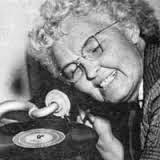
Joy Ridderhof


Elisabeth Elliot in her thoughtful book A Path Through Suffering writes, “When a man or woman belongs to God (when the branch dwells in the vine) it is the hand of God at work when the pruning comes, regardless of second causes.  A life’s work---what to us is a perfectly good branch, perhaps the only ‘important’ branch---may be cut off.  The loss seems a terrible thing, a useless waste.  But whose work was it?”  God’s husbandry in our lives never diminishes us.  Pruning is always done to shape us and point us in the direction of greater growth and fruitfulness. 


In  1937 Joy Ridderhof (1903-1984) returned to her parent’s home in Los Angeles after only six years on the mission field.  Joy had prepared for and planned on spending a lifetime at her missionary post in Honduras, a people and country she loved, but dysentery and malaria had taken their toll and she no longer had the health or strength to remain.  A different kind of person might have assumed this “pruning” was from their missionary career altogether, but for Joy, even as she lay on her sickbed, her prayer was “what next Lord?”  And what followed proved to be a ministry on a global scale.


Joy in college
An important part of this story begins long before Joy left for the mission field.  Joy was greatly influenced by Robert C. McQuilkin, a popular author and conference speaker, who spoke at her home church as a young woman.  He introduced the idea that worry was sin and that we are to rest in the truth we are under God’s hand in all things and therefore we rejoice in all circumstances be they good or hard.  Joy took this to heart and watched it modeled when she was able to go to college at Columbia Bible College and live with the McQuilkin family (she was one of the school’s earliest students attending before they even had dormitories).  To understand this concept of prayer and rejoicing, is to understand the foundation of Joy’s life and ministry.  This included praising God in the hard things and the prayers that were unanswered as well as the good things that came her way.  For Joy, this was not some sort of denial of her circumstances, but a sign of her faith that God is good and deserves praise no matter what is in front of us.  She knew want, hardship, and illness.  She also saw miraculous provision, answers to prayer, and souls saved through the years.


As she recuperated in her parent’s home and prayed for guidance from the Lord, soon two memories were brought to mind.  First she had a memory from childhood when her father brought home a used gramophone for the family with a few records.  She remembered listening to those records and even remembered the songs 25 years later.  Second, she recalled a conversation with a fellow missionary while she was in Honduras.  They had passed by a saloon and heard some unsavory Spanish song playing on the gramophone inside.  The missionary said “if only we had gospel recordings in Spanish” to play for these people.  This idea began to take shape and soon came to fruition.


On December 31st 1938 Joy and some friends who were singers and native speakers of Spanish living in L.A. went into a small recording studio run by a friend and recorded a program Joy had written of scriptures and Christian songs in Spanish.  This program was transferred to gramophone disc (early records).  Joy packed these gramophone records up carefully with a letter and mailed them to the missionary who replaced her in Honduras.  These records were to be given to people who had record players in their homes.

Joy on mission to the Phillippines

Soon an enthusiastic letter arrived for Joy at her home in Los Angeles.  Please send more records.  The people are listening over and over again to the records, they understand the message and they are converting to Jesus Christ.  Soon these records began circulating in other Latin American countries and as word spreads around the mission world about them, there come more requests for records to be made in different languages.


Joy Ridderhof was a one-woman show working at her world headquarters which also happened to be her upstairs bedroom.  She saw the vision but without any resources of her own was compelled to lay this whole ministry before the Lord.


From that day forward, piece by piece, person by person, country by country, the Lord provided an incredible team to supply this need in world evangelism.  When funds or know-how was needed, prayers and trusting in God’s provision alone, yielded every single need. Originally Joy’s vision was for Spanish speaking countries.  Later she was convinced to take on the Navajo language.  It was this beginning which moved here along the path to a more global scope.


They went from using rented studios to a home studio but eventually Joy saw that the work would only be able to expand if they could go to the native speakers and record them in the field rather than depend on their ability (which was non-existent in most cases) to travel to Los Angeles.


Ridderhof was a faith missionary along the lines of George Mueller, where the only one in the world familiar with her needs and the needs of her burdgeoning mission was God.  He was informed daily, hourly in prayer.  But that was all.  Ridderhof had the unshakeable belief she was doing God’s work and God would direct her with his supply.  She didn’t wait for things to “just show up” all the time though.  Sometimes she believed she needed to step out and move forward and God would provide in the moment.  And He did.
Alaskan "Eskimos" listen to a Gospel Recording


Early trips were made to Mexico, Alaska, and the Philippines, and later throughout Asia.  These trips were often years at a time and many times were just Joy and a couple other women missionaries. 
With the help of missionaries on the ground, tribes with no written languages would be located.  Sometimes days of traveling and hiking would be required to get to them.  Sometimes through several translators, the simple gospel would be stated and then translated until the speaker understood it enough to speak into a microphone and record it.

Millions of records were produced and eventually heavy duty gramophones gave way to hand-cranked cassette players, which in turn have been replaced by the digital phones which are used by nearly every people group around the world no matter how remote or poor they are.
Many branches of the ministry have opened up, each providing its own expertise and access to different language groups.  Lighter weight and heavier duty recording equipment were developed along the way to speed the process of recording in the field.

a simple record player for field

Though Joy Ridderhof passed away in 1984, her mission, known today as Global Recordings Network, continues to thrive and work among groups of people who might otherwise not get the opportunity to hear the Gospel in their own language.  A major thrust of GRN is the Tailenders Project which targets languages of less than 10,000 speakers.  Although usually passed over by traditional missionaries, GRN is able to take a simple approach to reach these people with recorded Bible stories.  Most of these are illiterate cultures, which doesn’t mean they have no intellectual life but rather that your society is less inclined to printed words and more inclined to learn orally.  The Gospels of Jesus and most of the Old Testament are given to us not as theological propositions but in stories that we must reflect upon to learn their meaning.  This is God’s revelation and it suits the oral learner as well as the reader.


For many of the tribal groups it was the very first time they heard the Bible, but also a voice recording in their own language.  Today Global Recordings have captured nearly 6000 languages and produced a gospel message for each.  They are available for download free of charge at www.globalrecordings.net


Sources:
Amazing Stories from Global Recordings Network.  Allan Starling Editor.  (Temecula : Global Recording Network, 2014)
Thompson, Phyllis.  Faith By Hearing: The Story of Gospel Recordings. (Hong Kong : China Alliance Press, 1960)
Tucker, Ruth A.  From Jerusalem to Irian Jaya : A Biographical History of Christian Missions.  (Grand Rapids : Academie Books, 1983)
http://globalrecordings.net/en/380